

Project Information
Background to the BMD's Contract Research
Germany’s Federal Ministry for Transport (BMV) wishes to boost climate-friendly rail transport and promote innovation and research in the rail sector. Digital automatic coupling (DAC) is a key innovation contributing to the digitalisation and automation of rail freight transport (RFT). It can increase the efficiency, reliability and competitiveness of RFT in Europe. The BMDV is therefore promoting the Europe-wide introduction of DAC.
To this end, the BMV commissioned a research project in 2016 entitled ‘Construction and Testing of Innovative Freight Wagons’. The year-long in-service testing also involved automatic coupling systems being tested, resulting in important findings regarding the use of automatic coupling in rail freight transport. Link: Innovative freight wagons.
In 2019, the BMV commissioned a study on the ‘Development of a concept for the EU-wide migration to a digital automatic coupling system (DAC) for rail freight transportation’ for the purposes of identifying principles.
The migration study showed that many European railway undertakings and wagon keepers supported the introduction of DAC Type 4. With the establishment of a pan-European migration program for DAK, the European DAC Delivery Programme (EDDP), a basis has been created for making decisions at the European level and jointly driving forward the introduction of DAK.
A BMDV pilot project to accelerate the DAC migration process for the demonstration, testing and approval of DAC was awarded to the DAC4EU consortium (= Digital Automatic Coupling for Europe) on 22 June 2020.
This project involves various manufacturers’ coupling prototypes being tested in order to determine the basic principles for the selection of a standard DAC for the Europe. After completion of the test series in Phase I, a demonstrator train with the DAK type selected by the EDDP was constructed and then tested under real operational conditions in Phase II. The project is being conducted on behalf of the Federal Ministry of Digital Affairs and Transport (BMDV) from June 2020 to December 2022 and is funded with approximately 13 million euros. In October 2022, the contract was awarded for an extension of the project until June 30, 2024, with additional financing of around 7 million euros. This is to ensure that the necessary further developments of the coupling systems are accompanied.
The EU transport ministers have likewise made a commitment to this technology and established DAC as a key European project in the area of rail freight transport in the Berlin Declaration.
DB AG
Deutsche Bahn (DB AG) based in Berlin is a leading supplier of mobility and logistical services with a focus on rail transport in Germany. About 340,000 employees are employed by DB Group, including over 200,000 in the integrated rail system. The integrated operation of transport and rail infrastructure and the economic and environmental linking of all modes of transport move both people and goods.
In passenger transport, DB AG transports more than seven million people each day on trains and buses in the integrated rail system. In rail freight transport, the DB AG network carries more than 230 million tonnes of freight each year. At about 33,000 km, the DB AG rail network in Germany is Europe’s longest and DB AG is also one of Germany’s largest energy suppliers.In Europe, DB Group is the market leader in regional rail passenger transport and second in long-distance rail passenger transport.
DB Group is also the market leader in track infrastructure and in operating stations in Europe, as well as in European rail freight transport and in European land transport.
With the new Strong Rail strategy, DB Group is focusing on the business operations of the integrated rail system. As such, Europe will continue to be DB Group’s field of activity. In 2019, it generated a turnover of approximately 44.4 billion euros.
DB Cargo AG
Nowhere around the world is the rail network as dense as in central Europe. DB Cargo, Europe’s largest and most efficient rail freight company, operates at the heart of this network. It serves its customers from all industries as a one-stop shop for fast, efficient and reliable Europe-wide rail transport services.
With approximately 4,200 railway sidings throughout Europe and activities in 17 European countries as well as in China, DB Cargo affords its customers access to one of the largest rail networks in the world. DB Cargo is therefore the number one company for rail freight transport in Europe. With more than 82,000 freight wagons and approximately 2,700 locomotives, it boasts Europe’s largest rail fleet. DB Cargo is promoting the digitalisation and automation of locomotives and freight wagons as well as the processes at marshalling yards and workshops.
Ermewa SA
Founded in 1956, Ermewa SA is a European market leader in freight wagon rental. The company has a fleet of 42,000 freight wagons for freight forwarding companies, railway undertakings and industrial companies in all sectors: steel, oil, gas, chemicals, palletised goods, aggregates, containers, timber, foodstuff, etc. Ermewa can supply both standard freight wagons and tailored solutions for specific requirements.
Over the past 60 years, the company has expanded its activities in the vast majority of European countries and now has a workforce of more than 200 employees at 17 sites around Europe. Ermewa SA is a subsidiary of the Ermewa Group, the European market leader in asset management.
As a rail freight transport market player, the company expedites innovations and contributes to the development of the next generation of freight wagons and materials.
GATX Rail Europe

GATX Rail Europe (GRE) based in Vienna, Austria, is a leading, full-service tank and freight wagon lessor that supplies its high-quality, diverse fleet in more than 20 countries in Europe. Its experienced, service-oriented team makes tank and freight wagon rental and rail transport simple, efficient and seamless. As a wagon owner and keeper charged with ECM functions 1 to 3, GRE uses a customer-oriented model offering swift solutions so that the customers can focus on their core business.
Upward of 220 customers across various industries utilise GRE’s more than 25,500 tank and freight wagons as an efficient, environmentally friendly, safe and competitive solution relative to other transport modes.
Its strategically located offices across Europe allow for localised customer support. In addition to its state-of-the-art full-service and repair workshop in Poland (WSO Ostróda – ECM function 4), GRE has long-standing relations with numerous repair workshops and producers of tank and freight wagons throughout the continent. GRE is part of GATX Corporation, a lessor of tank and freight wagons which has been listed on the New York Stock Exchange for more than 120 years (NYSE ticker: GATX).
Rail Cargo Austria AG
The Rail Cargo Group is ÖBB’s freight traffic service provider. With 9,340 employees, subsidiaries throughout Europe and an annual turnover of 2.3 billion euros, the Rail Cargo Group ranks among Europe’s leading rail logistics companies. Its comprehensive production network with end-to-end logistics solutions covering the entire Eurasian continent brings together people, businesses and markets – from the first to the last mile. As the industry’s sustainable backbone, its rail transport services throughout Austria reduce carbon emissions by 1.1 million tonnes. The Rail Cargo Group sets innovation and digitalisation standards and significantly contributes to shaping the industry.
With their expertise and passion, the company’s employees deliver future-oriented, punctual logistics solutions from a single source for block train and single wagon traffic as well as intermodal transport. The Rail Cargo Group transports approximately 105 million tonnes of goods to their destination every year – by environmentally friendly means, reliably, flexibly and quickly.
SBB CFF FFS AG
SBB Cargo AG: the beating heart of the Swiss economy
SBB based in Olten, Switzerland, is Switzerland’s leading freight transport company, accounting for more than a quarter of the country’s freight traffic. Just under 16 per cent of this is attributable to SBB Cargo AG, which connects the major economic areas as the beating heart of the Swiss economy. In 2019, SBB Cargo AG transported 29.8 million tonnes net of freight within Switzerland in wagonload, block train and combined transport.
VTG AG

Headquartered in Hamburg, VTG Aktiengesellschaft is a leading wagon hire and rail logistics company in Europe. Its fleet comprises approximately 95,000 rail freight wagons, with a focus on tank, intermodal, standard freight and sliding wall wagons. In addition to the leasing of rail freight wagons, the Group offers comprehensive multimodal logistics services, mainly for rail transport modes, and global tank container transport.
With the combination of its three divisions wagon hire, rail logistics and tank container logistics, VTG offers its customers a high-performance platform for international freight transport. The Group has many years of experience and specific expertise, in particular in the transport of liquid and sensitive goods. Its customers include numerous well-known companies from almost every industrial sector, for example the chemical, petroleum, automotive, agricultural and paper industries.
In the 2019 financial year, VTG generated a revenue of 1,221 million euros and an operating profit (EBITDA) of 512 million euros. The company is primarily represented in Europe, North America, Russia and Asia via its subsidiaries and affiliates. As of 31 December 2019, VTG has a global workforce of approximately 1,750 employees.
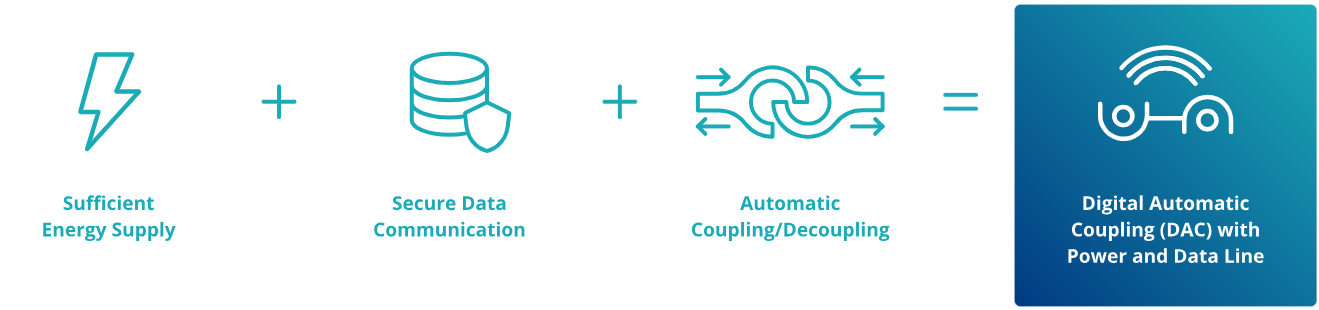
As the digitalisation and automation of rail operations increase, many applications are being developed which will significantly boost the attractiveness and productivity of rail freight transport. For this, the following prerequisites have to be met:
Benefits
Transferring freight transport from the road to rail is essential if the climate targets set in Europe are to be achieved. But this is only possible with competitive rail freight transport (RFT). And DAC is a prerequisite for this. As such, Europe can only achieve its climate targets with DAC.
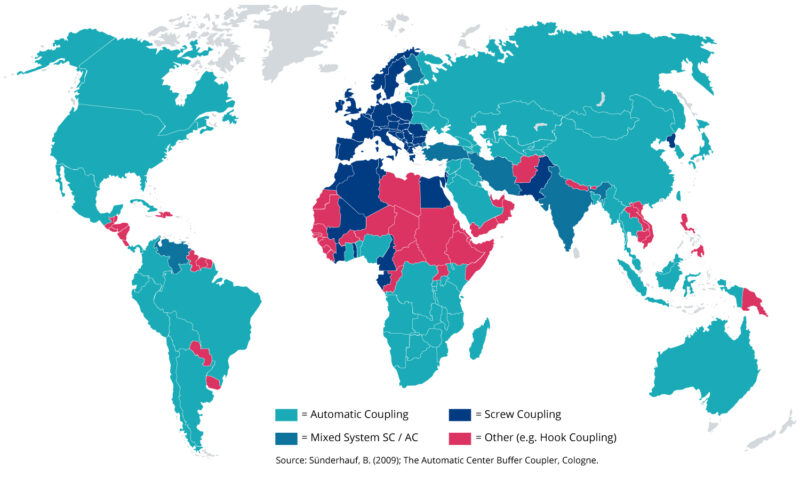
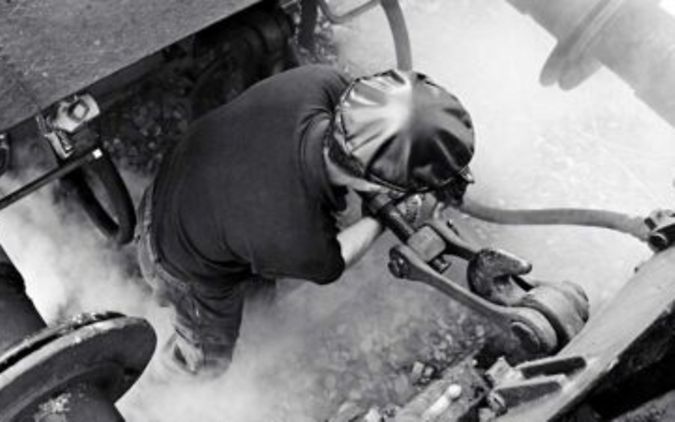
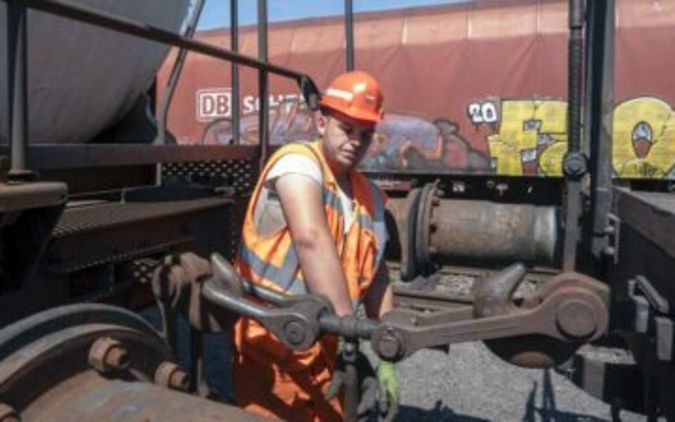
In Europe, trains are still predominantly coupled and decoupled entirely mechanically with screw couplings and buffers, without power and/or data lines. In the case of a train with 25 wagons, it generally takes approximately 60 minutes merely to walk from wagon to wagon and couple them. The shunter has to walk up and down the train up to three times. With shunting, a brake test and wagon examination, train preparation can go on for two to three hours. It can take even longer if a wagon has to be removed. The manual train preparation procedures have barely changed over the past decades.
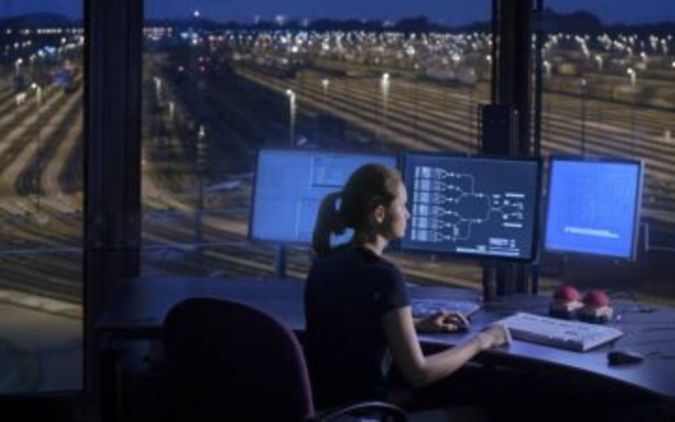
DAC will launch RFT into the 21st century. In addition to automatic coupling, the introduction of power and data lines thanks to DAC allows for the automation of rail operation processes such as brake testing as well as for the introduction of electronically controlled braking systems and data communication throughout the train. The time-consuming manual RFT processes are thus entirely automated and a freight train is ready for its scheduled departure in minutes rather than hours.
DAC additionally allows longer and heavier trains to be formed – another crucial step in the direction of greater RFT efficiency and productivity. Electrical energy in the train set allows electro-pneumatic brakes to be used, which allows for higher speeds and shorter stopping distances than with only pneumatic brake control. Power and data lines are also advancing the introduction of sensors on wagons, for example for permanent wagon component and freight monitoring. This allows customers to integrate RFT into digital logistics chains – an attribute which has been called for urgently for some time now.
These are just a few examples of the benefits of DAC. In total, 28 different use cases were identified. Some of these arise simply from the use of automatic coupling irrespective of the level of automation. Other use cases arise from DAC being an enabler of the automation of rail freight transport. There is additional potential in the areas of occupational safety, employee recruitment, energy conservation and the tapping of new market segments.
Improving Efficiency - Benefits of DAC
- Reduction of effort associated with manual shunting
- Reduction in shunting locomotive effort by eliminating the need to close up freight wagons after the hump
- Acceleration of shunting processes and increased system speed in RFT
- Formation of longer trains
- Formation of heavier trains
- Increasing the operating speed by using the brake position P
- Reduction in maintenance effort: lower wear on wheelsets
- Reduction in maintenance effort: elimination of buffer wear and buffer lubrication
- Reduction in maintenance effort due to reduced infrastructure wear
- Increase in payload due to elimination of buffers
- Reduction in wagon weight due to modified freight wagon design
Safety, Employees, Market Potential
- Increased protection against derailment
- Increased occupational safety for marshalling personnel
- Maintenance of shunting operation in the event of personnel recruitment difficulties
- Increase in energy recuperation due to modified longitudinal dynamics in the train
- Development of new market segments due to faster transport/cycle times
Automation, DAC as an Enabler
- Automatic brake test
- Automatic calculation of braking weight
- Condition-based maintenance via on-board condition monitoring of components
- Elimination of battery replacement in telematics devices thanks to power line use
- Higher system speed due to the elimination of brake lever position adjustments P or G
- Train integrity test
- Monitoring of loads/loading
- EP brake
- Derailment detection
- Registration of wagon order
- Monitoring brake condition
- On-board detection of hot boxes
Current solutions
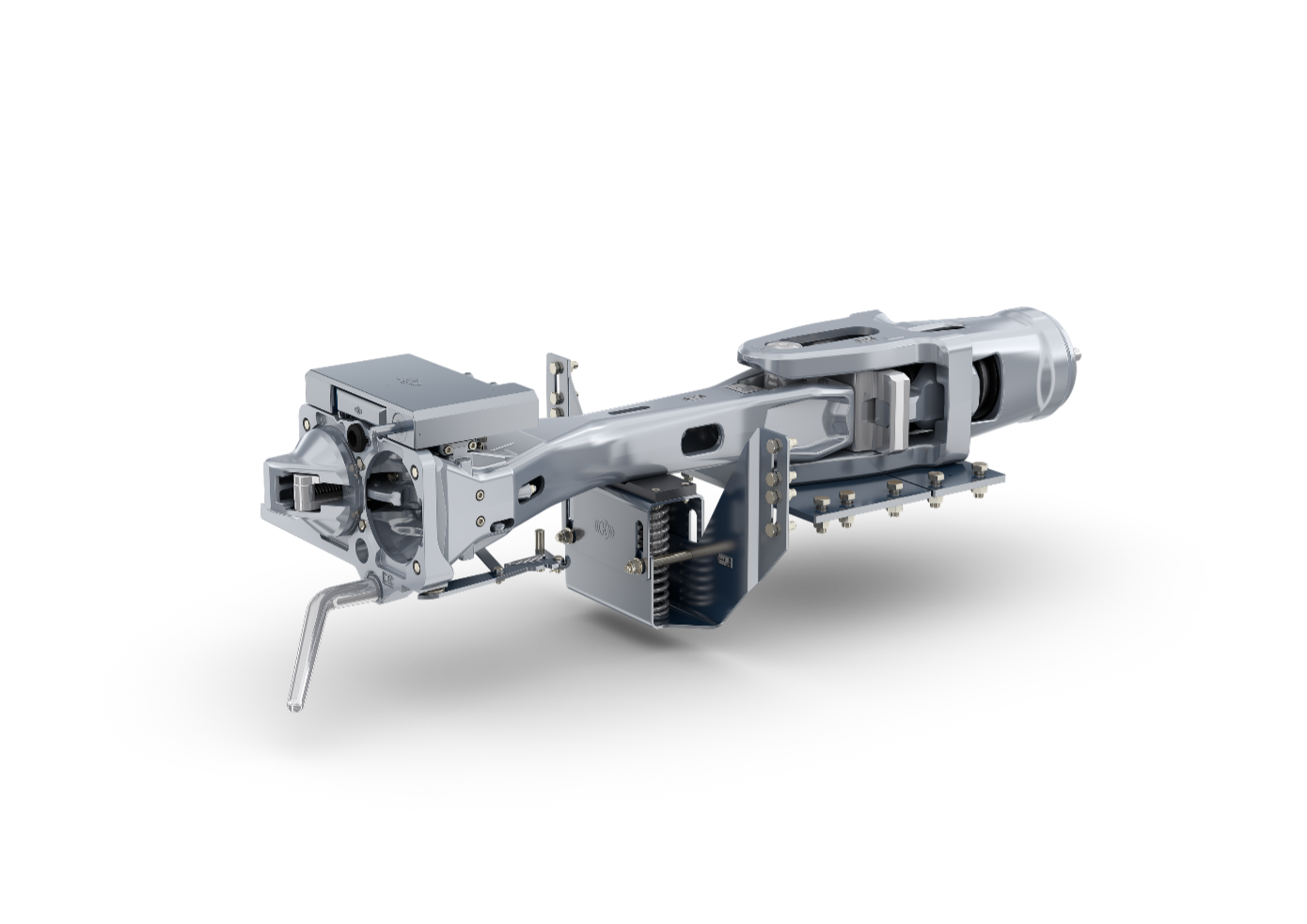
DAC Type 4 couplings made by four manufacturers are currently being tested in the DAC test.

 CAF
CAF








 Go
Go