


Component Qualification and Testing in Commercial Operations – Phase V and VI
Phases V and VI marked a major milestone for DAC4EU: for the first time, the Digital Automatic Coupling (DAC) was used in a commercial freight train in Europe. The successful trials confirmed the technology's readiness for the next stage on the road to large-scale deployment across Europe.
With project Phases V and VI, DAC4EU achieved the decisive transition from technical development to commercial railway operations. The objective was to qualify the Digital Automatic Coupling (DAC) under real operating conditions, demonstrate its reliability, and establish the foundation for future approvals and wider deployment across European rail freight transport.
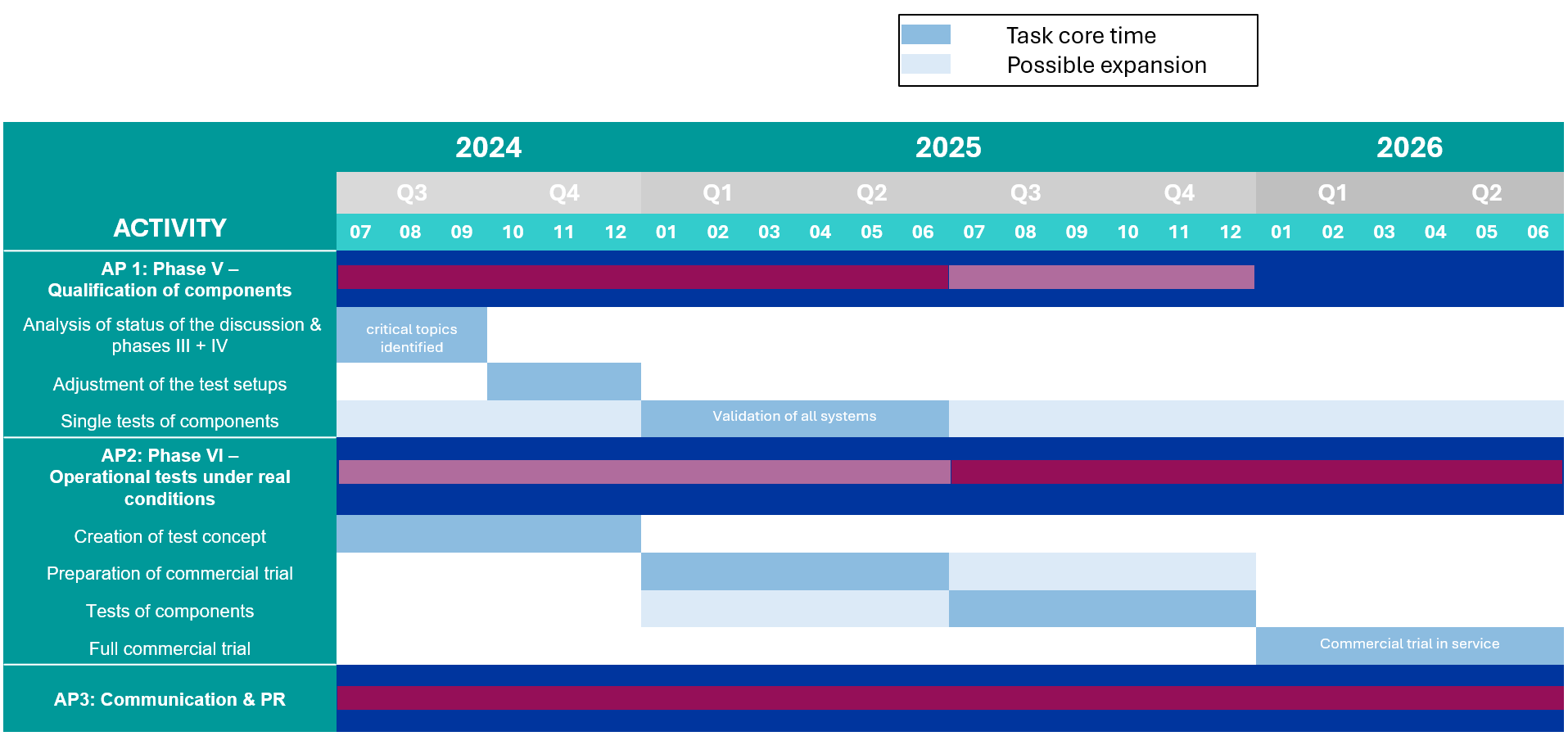
Phase V focused on the qualification of individual system components. The DAC systems underwent extensive testing and further optimization within the project. Particular attention was paid to mechanical and pneumatic functions, power and data transmission, and the operational requirements of shunting activities. One of the most demanding areas of investigation was operation on hump yards, where freight wagons are automatically uncoupled and reassembled. The trials demonstrated that DAC can be successfully deployed in these complex operational environments and provides important prerequisites for automated shunting processes.
Another key focus was the testing of digital functionalities extending beyond the coupling itself. These included new solutions for coupling condition monitoring, automated support for shunting operations, and reliable transmission of data and power between vehicles. In parallel, a dedicated DAC test rig was established to simulate operating conditions, environmental influences, and long-term mechanical loads under realistic conditions. The investigations confirmed the robustness and durability of the tested systems.
The results achieved in Phase V laid the foundation for the next major milestone: the establishment of Europe’s first commercial DAC train as part of Phase VI. Together with the Westfälische Landes-Eisenbahn (WLE), an existing limestone freight service was converted to DAC operation. This involved retrofitting eleven freight wagons and one locomotive, developing new operational procedures, and preparing the necessary approvals.
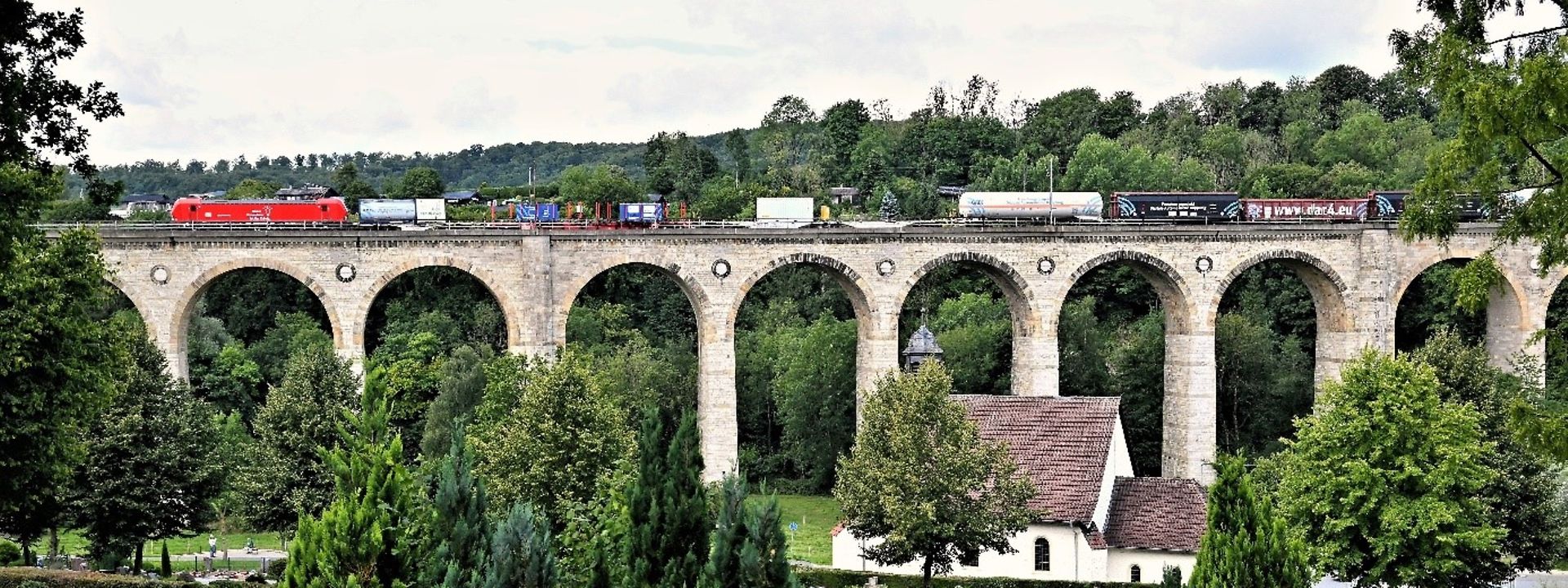
In spring 2026, the first fully DAC-equipped train entered regular commercial service. For the first time in Europe, this demonstrated that DAC can operate reliably not only on test tracks but also in day-to-day freight transport. The vehicles covered thousands of kilometres in regular service and proved their performance even under demanding conditions such as dust, dirt, and intensive use in an industrial environment. Operating personnel particularly appreciated the simplified handling compared with conventional screw couplings.
At the same time, extensive measurements were carried out to improve the understanding of the forces acting on automatic couplers in heavy freight trains. The data collected provides an important basis for the design of future systems and confirms the potential of DAC for longer and heavier freight trains. In addition, concepts and validation procedures were developed that can support future approvals and further pilot projects.
With the successful completion of Project Phases V and VI, DAC4EU demonstrated that the DAC is capable of making the transition from demonstrator technology to commercial railway operation. The insights gained over six years of project work provide an important foundation for further European development, approval, and deployment of this key technology for rail freight transport.

 Go
Go